Sub-Zero serviceEnergy check
Sub-Zero energy efficiency audit: measured on your unit, not estimated
Online calculators guess. An audit puts a meter on your Sub-Zero, records what it actually draws through complete cycles, and compares that with what the model is rated for. Then we tell you which parts are to blame and what to fix first.
Rated 4.9 of 5 · 287 customer reviews About these ratings
Is your unit drawing more than it should?
Answer 1 of 3
Is my Sub-Zero refrigerator using too much electricity?
The only reliable way to know is to measure it. Signs that point that way: the compressor seems to run almost nonstop, the top grille area feels hotter than usual, or your bill rose with no other change. An audit meters the unit over full cycles and compares the result with its rated consumption.
What pushes consumption up
Extra energy use on a Sub-Zero almost always traces back to one or more of these. The audit is about finding which ones apply to your unit.
- Condenser coil
- Dust and pet hair on the coil trap heat, so the compressor runs longer to reject the same load. It is the most common cause and the simplest to correct.
- Door gaskets and hinges
- A torn, flattened or dirty gasket, or a door that has sagged, lets warm, humid kitchen air in. The system then cools that air and melts the frost it leaves behind.
- Defrost system
- If defrost runs too often, too long or not at all, the evaporator either wastes heat or ices over and loses airflow. Both show up on a full-cycle measurement.
- Installation and surroundings
- Blocked ventilation at the grille, tight clearances in the opening, a unit that is out of level, or a position beside a heat source or a sunny window all add load.
- Settings and use
- Setpoints colder than needed, doors left ajar, and compartments packed so tightly that air cannot circulate make the system work harder than the design intends.
- Wear on moving parts
- Fans and compressors that are tiring out draw differently than healthy ones. The audit flags them so you can decide whether to act now or watch them.
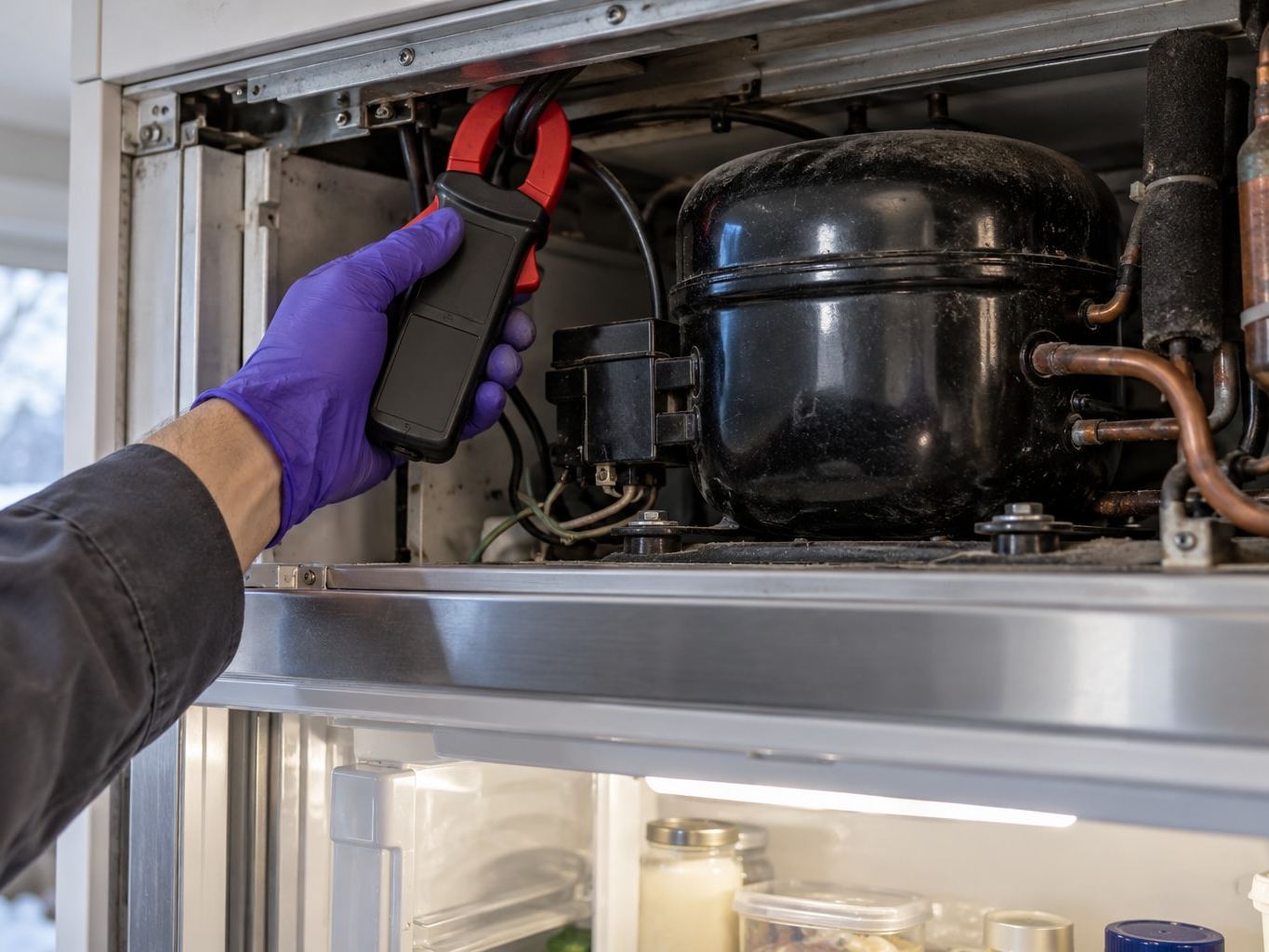
Four stages of the audit
-
Meter a full cycle
We connect a meter to the unit's supply, using a plug-in logger or a clamp meter on the lead behind the grille depending on the wiring, and record consumption across complete run, off and defrost periods.
-
Compare with the model's rating
The measured figure is set against the published consumption for your model and series, taking room temperature and door use during the test into account.
-
Find the culprits
If the unit draws more than expected, we check the parts on the factor list above (coil, gaskets, defrost, airflow, installation) to see which ones explain the gap.
-
Rank the fixes
You get a short written plan in priority order: what is quick to correct, what can wait, and what would only be worth doing as part of another repair. Each item carries a price once inspected.
Answer 2 of 3
How do you measure refrigerator energy consumption?
Put a watt-hour meter on the refrigerator's supply and leave it through complete cycles, including at least one defrost. A short reading misleads, because a compressor alternates between running and resting. On a built-in Sub-Zero the outlet is often behind the grille, so a technician may use a clamp meter instead.
Assumptions worth checking
- You may hearA newer refrigerator is always cheaper to run than the one I have.
- In practiceThe condition of the unit matters more than its model year. A well-kept Sub-Zero with a clean coil and good seals can run close to its rating, while a neglected newer one can draw well above it. Measure before you decide to replace.
- You may hearIf it keeps food cold, it must be running efficiently.
- In practiceA Sub-Zero can hold temperature while working much harder than it should. The extra effort shows up as longer run times and more heat at the grille, not as warm milk.
- You may hearTurning the thermostat warmer is the fix.
- In practiceRaising the setpoint reduces load a little, but it does not touch the real causes, and food safety comes first. Keep fresh food at or below 40°F and the freezer near 0°F.
When an audit makes sense
Most people book this check for one of four reasons. The electric bill rose and nothing else in the house changed. The compressor seems to cycle on more often, or barely stops. The unit is an older one and nobody knows how it is doing. Or a repair has just been completed and you want proof that consumption came back down.
That last case is underrated. If we replace a fan motor, clear a defrost fault or fit a new gasket, a follow-up measurement shows whether the unit is back near its rating. Combined with regular scheduled maintenance, it gives you a record of how the appliance is aging.
We do not promise dollar savings. What a repair is worth on your bill depends on your utility rate, your kitchen and how the household uses the refrigerator, and we would rather show you the measured numbers than a projection. For the warning signs you can spot yourself, read our guide to spotting energy waste; to see how the Sub-Zero series differ, see the consumption comparison.
Pricing is the same as for any visit: $89 for the trip, one fee for every Sub-Zero you want checked, counted toward the work you approve. The exact cost of any correction comes after inspection. Details are on the pricing page.
Answer 3 of 3
Why does my refrigerator compressor run more than it used to?
Usually because the system is losing heat less easily or gaining it faster. A dusty condenser coil, a leaking door gasket, a defrost problem that ices the evaporator, or blocked ventilation at the grille are the common causes. Less often it is a weakening component or a refrigerant problem, which needs a technician.
Energy audit questions
- How much will I save after an energy audit?
- We do not quote savings, because they depend on your electricity rate and how the unit is used. What you get is the measured consumption, the rated figure for your model and a list of what is causing the difference. That lets you judge each fix on facts.
- Is it worth auditing an older Sub-Zero instead of replacing it?
- Often, yes. Sub-Zero units are built to be serviced, and many consumption problems come from coils, seals and defrost rather than the compressor. The audit shows whether repair brings the unit back near its rating.
- Can I measure my refrigerator's energy use myself?
- On a freestanding unit with a reachable outlet, a plug-in watt meter left for a full day gives a useful number. On built-ins the outlet is usually behind the top grille near live wiring, so leave that to a technician.
- Will the audit damage anything or empty my refrigerator?
- No. The unit keeps running during the measurement, so food stays where it is. We only open the grille and panels needed to connect the meter and inspect the parts.
- Do you do energy audits in Bolingbrook?
- Yes. Bolingbrook is one of the ten towns we cover. Visits run 8 AM–6 PM, seven days, and the contact page lists the rest of the area.
Measure it, then decide
Call us at any hour or book online. One $89 visit covers every Sub-Zero in the house.
Phone answered 24/7 · house calls 8 AM–6 PM, seven days